What Florida's Live Local Act allows developers to build
The Live Local Act lets mixed-income rental projects skip rezoning on commercial, industrial and mixed-use land. Here is what the statute allows, what it requires in return, and where cities and counties still have a say.
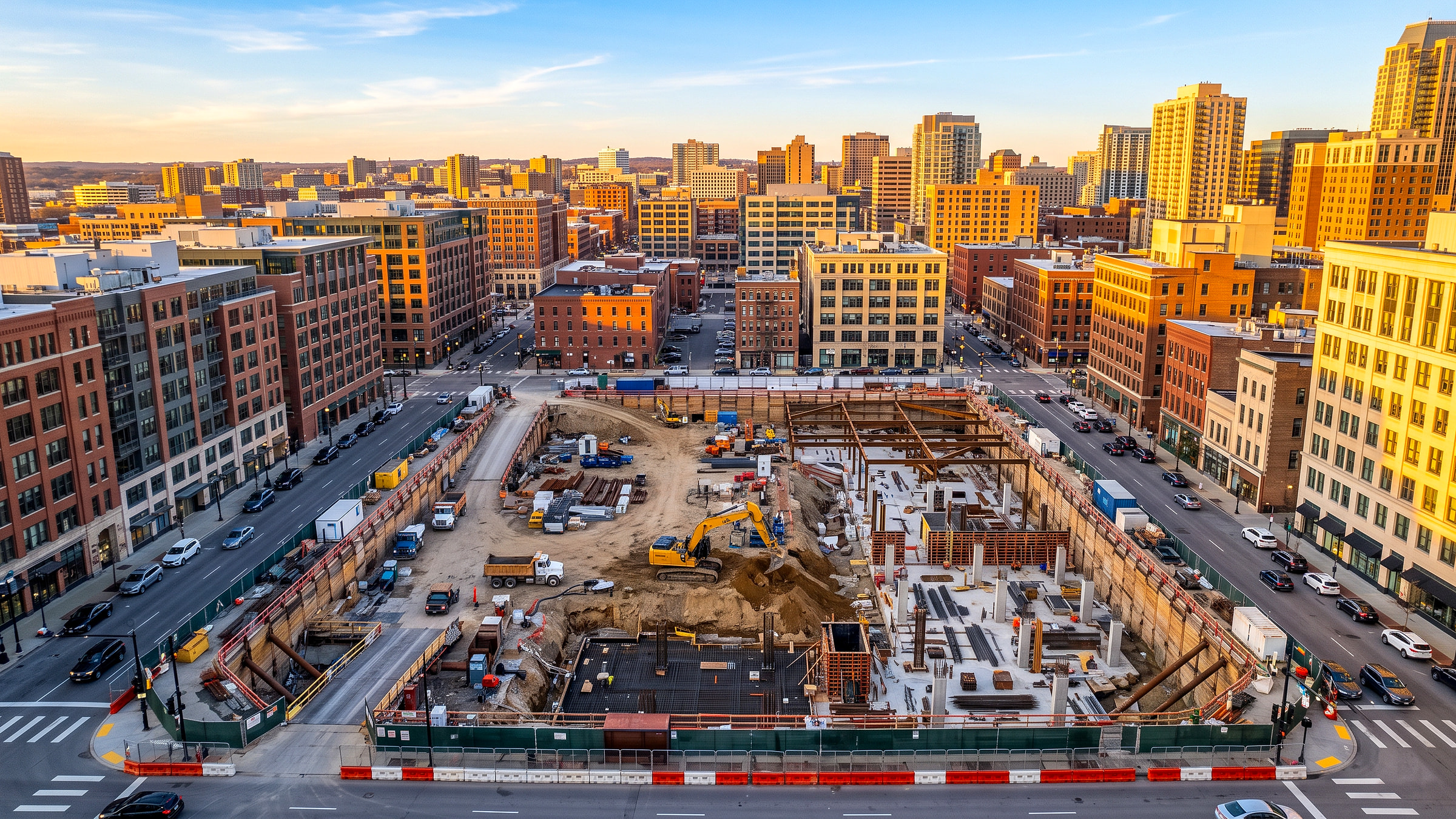
Florida’s Live Local Act lets developers build multifamily rental and mixed-use residential projects on land zoned commercial, industrial or mixed use without a rezoning, as long as at least 40 percent of the units are affordable rentals for at least 30 years. In exchange, the city or county must allow the highest density in its jurisdiction, generous height and floor area, and an administrative approval with no public hearing. A separate property tax exemption rewards newly built units rented at affordable levels.
This guide summarizes the statute as of October 2026. It is not legal or tax advice.
The news that moved today. Free email. Every weekday morning.
What laws make up the Live Local Act?
The Act began as SB 102 of 2023, chapter 2023-17, Laws of Florida, effective July 1, 2023. The Legislature amended it with SB 328 of 2024 (chapter 2024-188), which added floor area ratio protections and allowed some height limits, and again with SB 1730 of 2025 (chapter 2025-172, effective July 1, 2025), which extended the rules to parts of flexibly zoned areas such as planned unit developments and limited how much nonresidential space a local government can demand in a mixed-use project.
The zoning rules live in two parallel sections: Fla. Stat. 166.04151(7) for cities and Fla. Stat. 125.01055(7) for counties (unincorporated land). The tax exemption is in Fla. Stat. 196.1978(3).
Which projects qualify for Live Local?
Under 166.04151(7), a project qualifies if:
- It sits on land zoned commercial, industrial or mixed use, or in a portion of a flexibly zoned area such as a PUD permitted for those uses.
- At least 40 percent of its residential units are rental units that stay affordable for at least 30 years.
- If it is mixed use, at least 65 percent of total square footage is residential. The local government cannot require nonresidential use above 10 percent.
“Affordable” follows Fla. Stat. 420.0004: housing costs at no more than 30 percent of income for households up to the moderate-income ceiling of 120 percent of area median income.
The statute excludes airport-impacted areas, recreational and commercial working waterfront zoned industrial, the Wekiva Study Area and the Everglades Protection Area. Projects within one-quarter mile of certain military installations cannot get administrative approval.
What density, height and floor area does Live Local allow?
The city or county cannot hold a qualifying project below these floors, using the current figure or the figure in place on July 1, 2023, whichever is less restrictive (166.04151(7); 125.01055(7)):
- Density: the highest density allowed anywhere in the jurisdiction where residential use is allowed. Density from bonuses, variances or special exceptions does not count toward that figure.
- Floor area ratio: 150 percent of the highest FAR allowed anywhere in the jurisdiction.
- Height: the highest height allowed for a commercial or residential building within 1 mile of the site, or three stories, whichever is higher.
Two height carve-outs apply. If the site is adjacent on two or more sides to a single-family development of at least 25 contiguous homes, the government may cap height at the greatest of 150 percent of the tallest adjacent building, the site’s own allowed height, or three stories, up to 10 stories. If the parcel holds a contributing structure in a historic district listed before January 1, 2000, or an individually listed National Register structure, the 1-mile radius shrinks to three-fourths of a mile.
Does Live Local reduce parking?
Yes. On request, the local government must cut parking requirements by 15 percent if the site is within one-quarter mile of a transit stop, within one-half mile of a major transportation hub, or within 600 feet of available parking. Parking requirements are eliminated for mixed-use residential projects in a recognized transit-oriented development area (166.04151(7)).
Where do cities and counties still have a say?
Less than before, but not nothing. Under the statute:
- Approval is administrative, with no vote by the commission or a board, but the project must still meet the jurisdiction’s multifamily regulations, such as setbacks, and be consistent with the comprehensive plan on everything except density, FAR, height and land use.
- Historic sites can still be held to architectural design rules, as long as they do not cut height, FAR or density.
- Local transit-oriented rules still apply, except on use, height, density, FAR and parking.
- Every local government must post its Live Local administrative approval procedure on its website.
- Building moratoria are limited to 90 days in any three-year period.
The zoning preemption expires October 1, 2033. Projects approved under it remain conforming uses afterward, subject to the affordability requirement. Local governments must report Live Local projects and litigation to the state annually beginning November 1, 2026.
How does the Live Local property tax exemption work?
Fla. Stat. 196.1978(3) exempts units in newly constructed multifamily projects with more than 70 affordable units (more than 10 in an area of critical state concern), substantially completed within five years before the owner first applies:
- Units rented to households at or below 80 percent of area median income get a 100 percent exemption.
- Units rented to households above 80 percent and up to 120 percent of median get a 75 percent exemption.
- Rent cannot exceed the lesser of the Florida Housing Finance Corporation rent limit or 90 percent of market rent from an independent rental market study.
The owner needs a certification from the Florida Housing Finance Corporation and must apply to the property appraiser by March 1. Beginning with the 2025 tax roll, a taxing authority in a qualifying county may opt out of the 75 percent tier by a two-thirds vote, for a renewable two-year period. The subsection is repealed December 31, 2059.
What to look for in a Live Local filing
A Live Local project usually shows up as an administrative site plan or building permit, not a rezoning, so it never reaches a commission agenda. Signals in the file: a citation to 166.04151(7) or 125.01055(7), an affordability covenant of 30 years, a unit mix with 40 percent restricted units, a height justified by a building within 1 mile, and a 15 percent parking reduction request.
Track it on The American Developer
- Live Local site plans, permits and hearings in our hearings and filings coverage
- Permit volume by market on the permits data page
- Florida projects on the South Florida market page
- More explainers in topics and guides
Latest South Florida stories
All South Florida storiesWelltower nursing home buys reach $386M, Miami to Lauderdale Lakes
Nov 17Alfred Equities Buys South Beach Office Tower From Lender
Nov 17Florida Gained $20.6B in Income From Moves, Most of Any State
Nov 17Miami-Dade Permits $39M of Industrial and Retail in Four Days
Nov 17South Florida Owners Lost 40 Properties at Foreclosure Auction
Nov 16