How foreclosure auctions work in Florida, New York and Texas
Three states, three systems. Florida's clerks auction property online after a court judgment, New York sells through a referee or the sheriff, and Texas trustees sell on the first Tuesday of the month without going to court at all.
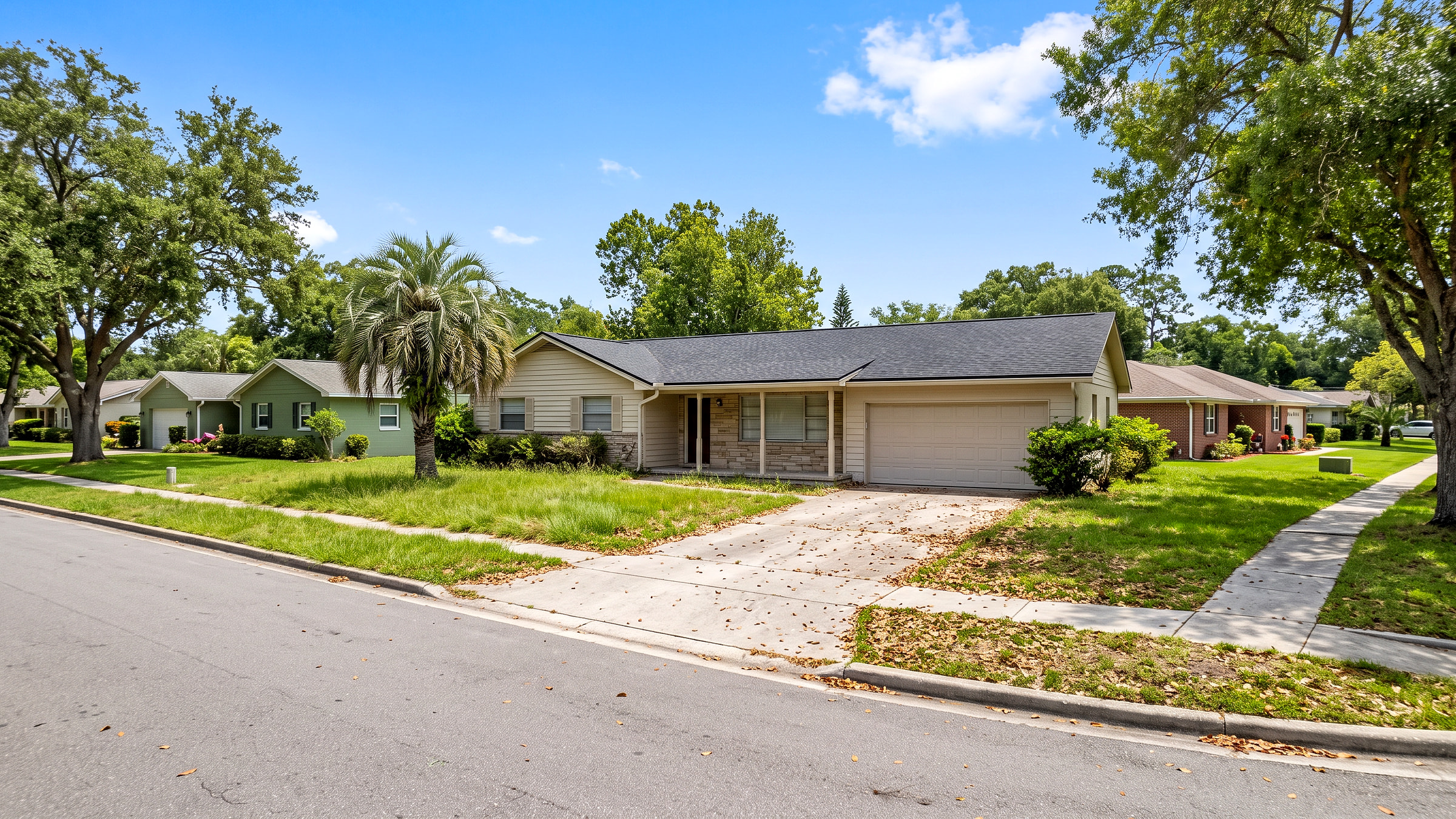
A foreclosure auction is the public sale that ends a foreclosure, and each state runs it differently. Florida and New York foreclose through the courts, with a clerk (Florida) or a referee or sheriff (New York) selling the property after a judgment, while Texas usually forecloses outside court, with a trustee auctioning the property on the first Tuesday of the month. Knowing which system applies tells you where the sale is noticed, how fast it moves and where to look for it.
This guide explains public procedure. It is not legal advice.
The news that moved today. Free email. Every weekday morning.
How does a Florida foreclosure auction work?
Florida is a judicial foreclosure state. Fla. Stat. 702.01 says all mortgages “shall be foreclosed in equity,” which means a lender has to file a lawsuit and win a final judgment before anything is sold.
The sale itself follows Fla. Stat. 45.031:
- Who sells: the clerk of court, at a public sale, and the statute allows the clerk to conduct it electronically.
- When: not less than 20 days and not more than 35 days after the final judgment, unless the plaintiff consents to a later date.
- Notice: published for two consecutive weeks, either on a publicly accessible website or in a newspaper of general circulation.
- Deposit: the high bidder posts 5 percent of the final bid at the time of sale.
- After the sale: the clerk files a certificate of sale. If no objection is filed within 10 days, the clerk files a certificate of title, which passes title to the buyer.
Where do I find South Florida foreclosure auctions?
The three South Florida clerks all sell online (as of October 2026):
- Miami-Dade: the Clerk of the Court and Comptroller’s mortgage foreclosures page points bidders to miamidade.realforeclose.com, where you must register before bidding.
- Broward: the Clerk’s Circuit Civil division runs sales at broward.realforeclose.com.
- Palm Beach: the Clerk and Comptroller’s foreclosures page says sales are held online, generally Monday through Thursday at 10 a.m., with cancellations posted on the auction site.
Each clerk notes that the sale does not guarantee clear title. Researching liens and the case file is the bidder’s job.
How do Florida tax deed sales work?
Tax deed sales are a separate track, governed by Fla. Stat. chapter 197, and they start with unpaid property taxes rather than a mortgage default.
Under Fla. Stat. 197.502, a tax certificate holder can apply for a tax deed with the county tax collector once two years have passed since April 1 of the year the certificate was issued. The clerk then records a notice of tax deed application and advertises the sale. For homestead property, the opening bid includes one-half of the latest assessed value on top of the taxes, interest and costs.
Under Fla. Stat. 197.542, the clerk sells at public auction and may do so electronically. The high bidder posts a nonrefundable deposit of 5 percent of the bid or $200, whichever is greater, and pays the balance within 24 hours, excluding weekends and legal holidays. If nobody outbids the certificate holder, the property is struck off to that holder; if the holder does not pay, the land goes on the clerk’s “lands available for taxes” list.
Miami-Dade’s tax deed page uses the same realforeclose site for tax deed sales. In Broward, tax deed auctions are run by the county’s Records, Taxes and Treasury Division rather than the clerk. Palm Beach lists its sales on the Clerk’s tax deeds page.
How does a New York foreclosure auction work?
New York also forecloses through the courts, under Article 13 of the Real Property Actions and Proceedings Law. For a resident owner of a home, CPLR 3408 requires a mandatory settlement conference, held within 60 days after proof of service is filed, before the case moves on.
If the lender wins, the court issues a judgment of foreclosure and sale. Under RPAPL 1351, the sale is made by or under the direction of the county sheriff or a referee, and it must take place within 90 days of the judgment.
Notice follows RPAPL 231: the time and place of sale and a description of the property are published in a local newspaper, either once a week for four successive weeks or at least twice a week for three successive weeks. After the sale, RPAPL 1355 gives the referee 30 days from completing the sale and conveyance to file a report of sale.
Auction schedules, locations and bidding rules are set county by county, so check the Supreme Court in the county where the property sits.
How does a Texas foreclosure sale work?
Texas allows non-judicial foreclosure. When a deed of trust or other contract lien grants a power of sale, the property can be sold without a lawsuit, following Tex. Prop. Code 51.002:
- When: a public auction between 10 a.m. and 4 p.m. on the first Tuesday of a month. If that Tuesday is January 1 or July 4, the sale moves to the first Wednesday.
- Where: at the county courthouse in the area designated by the commissioners court, or another public place the commissioners court designates.
- Notice: at least 21 days before the sale, by posting at the courthouse door, filing a copy with the county clerk, and sending certified mail to each debtor.
- Residences: if the property is the debtor’s residence, the servicer must first send a notice of default giving at least 20 days to cure before a notice of sale can go out.
Because notices of sale are filed with the county clerk, the clerk’s office in Dallas, Harris or any other county is where the monthly list starts.
How long does a foreclosure take in each state?
Only the final stretch is fixed by statute. In Florida the sale falls 20 to 35 days after judgment; in New York, within 90 days of judgment; in Texas, notice runs at least 21 days before a first Tuesday. The time before that, from default to judgment in Florida and New York, depends on the court’s docket and whether the case is contested, and no statute sets it.
Track it on The American Developer
- The Deal Board tracks South Florida foreclosure and tax-deed sales.
- The foreclosure auctions hub and the distress tracker follow upcoming and completed sales.
- Permits, filings and hearings covers the court and county filings behind them.
- Market coverage: South Florida, New York, Dallas and Houston. More explainers live in our guides.
Latest national stories
All national storiesBerkadia Sells and Finances 336-Unit Everett, WA Apartments
Nov 9Brookfield-CPPIB consortium completes $5.2B LXP buyout
Nov 3Berkadia Secures $65.5M Bridge Loan for Orlando-Area BTR Community
Oct 28HTG Breaks Ground on 73-Unit Affordable Housing in Kissimmee
Oct 27Oracle Sends Force Majeure Notice on $18B New Mexico Data Center
Sep 28